Choosing cleaning support for a medical or dental office starts with a clear division of responsibilities. A reception area, staff kitchen and clinical treatment room may sit beside one another, but they do not belong in an interchangeable cleaning scope.
For Vancouver clinic managers, the useful question is not simply whether a company offers “enhanced disinfection.” It is which tasks the clinic needs, who is qualified and assigned to perform them, and how those arrangements are documented.
Ferrol’s proposed offering is routine professional cleaning of agreed nonclinical clinic areas, subject to site assessment, operational readiness and a written agreement. It does not include specialized healthcare disinfection, sterilization, medical-device cleaning or reprocessing, clinical waste handling, biohazard cleanup or infection-control services. No infection-control certification is claimed.
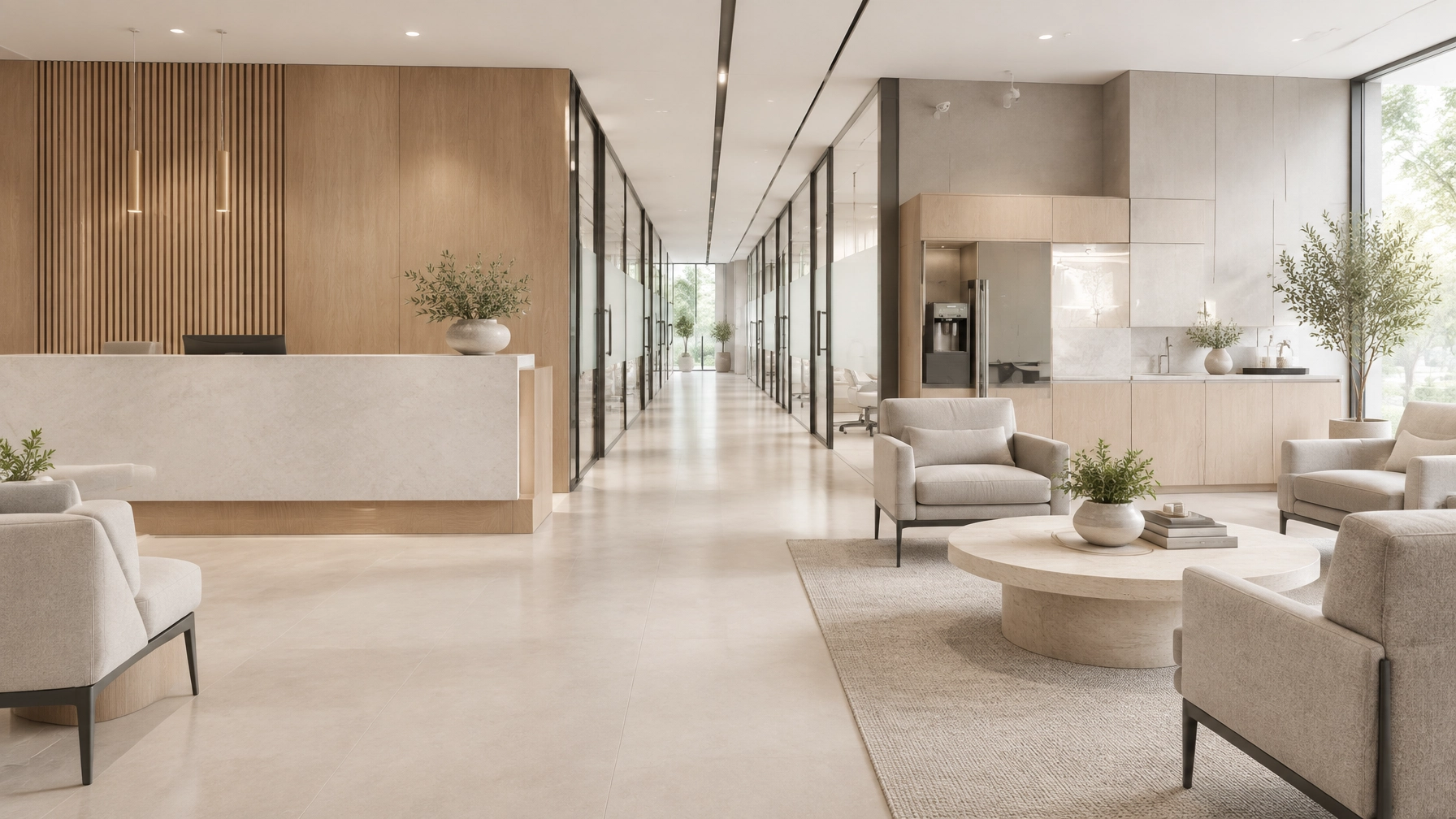
Images are illustrative Penny-generated visuals, not photographs of Ferrol staff, completed projects or verified Vancouver clinics.
Start with the scope, not a service label
A useful proposal identifies rooms, surfaces, tasks and exclusions. Reception and waiting areas, offices, staff spaces, washrooms and floors in agreed nonclinical areas can be discussed during a walk-through. Neither a room name nor a sales phrase establishes that every surface inside it is included.
Ask the provider to write down:
- The specific areas and surfaces covered.
- The tasks assigned to each visit.
- Which areas, equipment and materials must be left untouched.
- The access arrangements and agreed service frequency.
- Who to contact about a missed task or a condition outside the scope.
- What requires separate assessment rather than an on-the-spot promise.
Ferrol’s commercial cleaning service is the starting point for that conversation. The proposed clinic cleaning scope describes its nonclinical boundaries.
What “enhanced” does—and does not—tell you
The September 2016 BC environmental cleaning best-practices document describes different types of healthcare cleaning, including enhanced daily cleaning and additional-precaution cleaning. These terms sit within a healthcare framework; they are not proof that a commercial provider has the staff, training or systems to deliver that work.
The same guidance addresses risk-based cleaning intensity and frequency, designated responsibilities and contracted services. A clinic should use its applicable policies and professional advice to determine its requirements. This article offers questions for comparing providers, not a clinical cleaning protocol or a claim that Ferrol delivers those healthcare services.
Separate clinic responsibilities from provider responsibilities
Keep a written responsibility list with two clearly defined parts. The clinic retains oversight of its clinical and infection-prevention requirements. Tasks outside an external provider’s agreed scope need an identified, appropriately qualified owner; they must not fall into a gap between teams.
Clinical work: arrange through the clinic’s own processes
Patient-contact surfaces, treatment chairs, exam tables, medical equipment, instruments, clinical waste and body-fluid incidents must not be assumed to be part of Ferrol’s routine cleaning visit. Assign those tasks through the clinic’s established processes and qualified personnel. An after-hours cleaner does not replace work required between patient appointments.
Routine nonclinical work: agree before service begins
For the external cleaning proposal, list the reception, office, washroom, staff-space and floor tasks under consideration. Specify any restricted areas and who authorizes access. If the walk-through reveals requirements beyond Ferrol’s proposed scope, resolve them before accepting a schedule.
Make high-touch surfaces specific
“High-touch surfaces included” leaves too much open to interpretation. In an agreed nonclinical area, discuss door handles, reception-counter edges, light switches, waiting-chair arms and washroom fixtures individually. Identify which are included, which method is appropriate and who handles them between external cleaning visits.
Payment terminals, computers and other electronics need particular care. Do not assume that permission to clean a counter includes permission to clean the devices on it. Ask the clinic to identify restrictions and relevant manufacturer instructions before equipment is included in any scope.
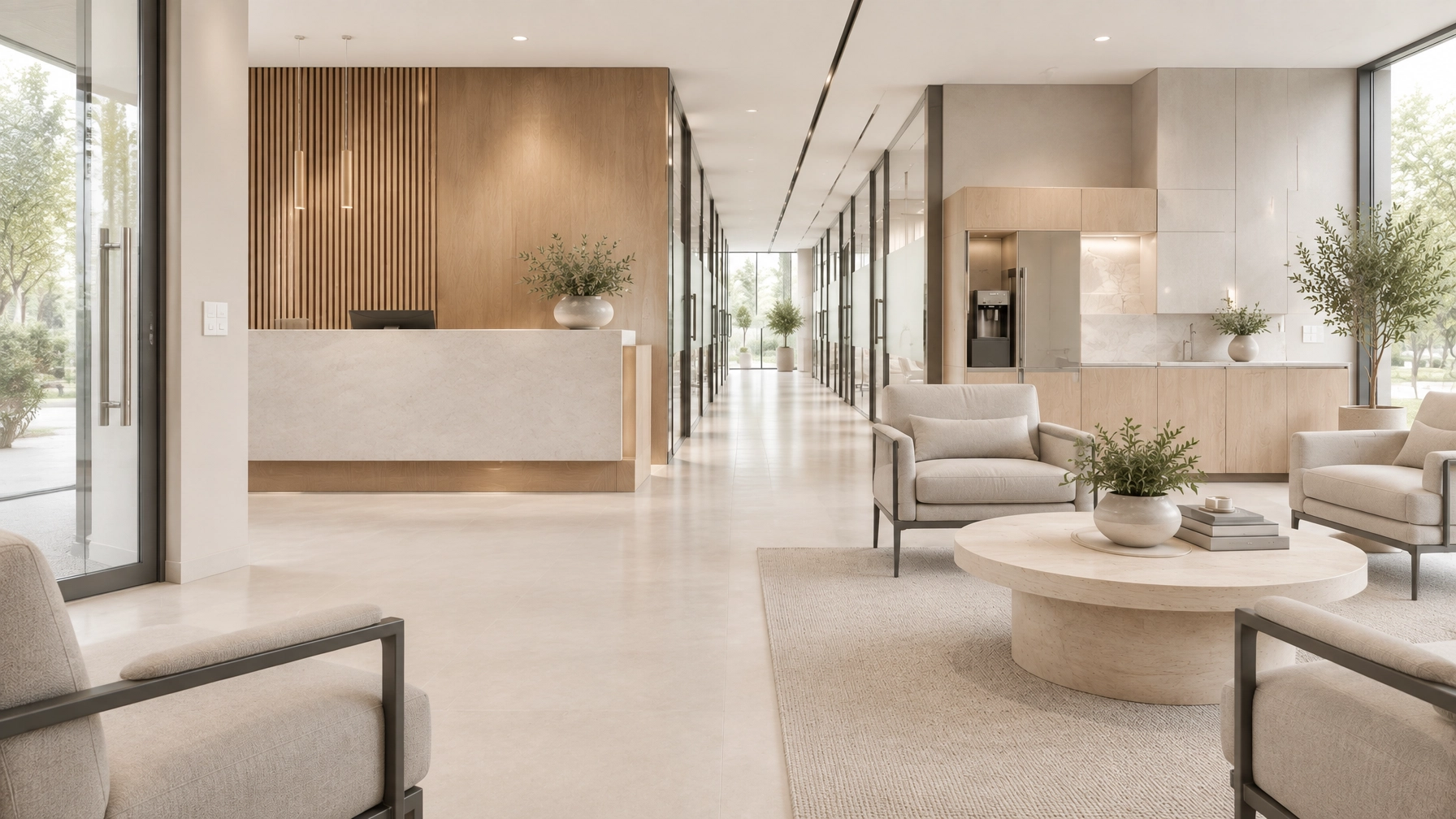
Illustrative waiting area; appearance alone does not establish suitability for a healthcare environment.
Set frequency around the clinic’s responsibilities
PICNet’s August 6, 2025 clinic quick-reference guide says patient-contact surfaces and surfaces used during care need cleaning and disinfection between patients. It also gives daily minimums for high-touch surfaces and general cleaning, with increased frequency where directed. These are healthcare guidance points for clinic planning, not Ferrol service commitments.
Ask the clinic lead to distinguish its required frequency from the external provider’s proposed visit schedule. A busy reception area may need attention during the day even when the routine cleaning visit happens after closing.
- Which tasks does the clinic arrange during opening hours?
- Which nonclinical tasks are proposed for the cleaning visit?
- Who checks an unexpected spill or other out-of-scope condition?
- What happens if access changes or a visit cannot proceed?
Discuss preferred access windows with Ferrol during the assessment. Early-morning, evening or recurring crew availability must be confirmed in the proposal; this guide does not promise a particular schedule.
Ask about product suitability before product preference
The PICNet guide identifies Health Canada-approved healthcare disinfectants with a Drug Identification Number and directs users to follow manufacturer instructions, including dilution and contact time. It also distinguishes cleaning away organic matter from the subsequent disinfection step. That guidance does not verify any product in Ferrol’s inventory or expand its service scope.
For the routine nonclinical work under discussion, ask for the proposed product names, intended uses, surface compatibility and safety information. Identify fragrance sensitivities and material restrictions before a product is agreed. Request alternatives where needed, without assuming that fragrance-free, low-VOC or other specific options are currently available.
A reassuring product label is not a substitute for a suitable method. Avoid treating “non-toxic” as a blanket guarantee, and do not select a disinfectant simply because it smells strong. Clinical product decisions belong within the clinic’s established policies and relevant professional guidance.
Put the working arrangements in writing
A useful nonclinical cleaning checklist should be readable by the clinic contact and the assigned provider. It should identify included tasks, excluded surfaces, agreed products, access instructions, service frequency and the process for reporting an issue.
Ask how staff are briefed on the agreed scope, how substitutions are handled, and how completion or missed work is communicated. Request evidence for any training, vetting or quality-assurance claim that matters to your practice. General commercial-cleaning experience should not be presented as healthcare infection-control expertise.
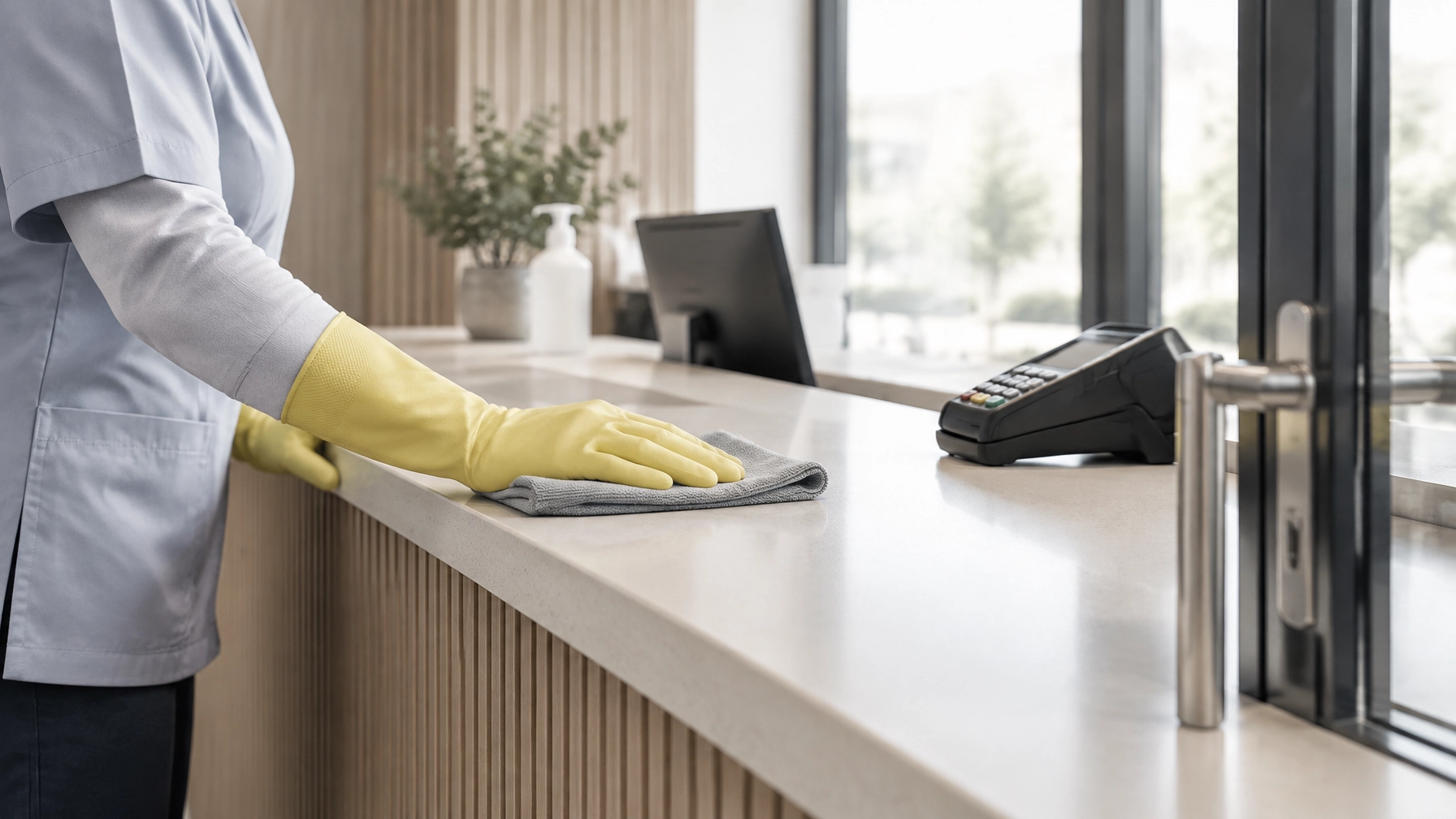
Illustrative cleaning scene, not a Ferrol employee or a demonstration of a validated disinfection procedure. The payment terminal is beside the wiping area, not being cleaned.
Compare proposals on the same basis
Price comparisons are useful only when the scope is comparable. Give each provider the same list of nonclinical areas, approximate floor area, access constraints and preferred frequency. Ask what is included in the price, what is excluded and how a change would be agreed.
Separate recurring tasks from any proposed initial or periodic detailed cleaning. Do not assume that a more expensive package includes specialized healthcare work, or that a “deep clean” addresses clinical requirements. Ask for those boundaries in plain language.
Discuss a practical nonclinical scope with Ferrol
A clear arrangement gives clinic staff and the cleaning provider fewer assumptions to work around. Start with the spaces you want assessed, the timing you prefer and the responsibilities your clinic already manages.
Review Ferrol’s commercial cleaning offering and request a clinic cleaning quote to discuss routine cleaning of agreed nonclinical areas in Metro Vancouver. Availability and suitability are confirmed through site assessment and a written agreement.
Sources and scope of this guide
- BC Best Practices for Environmental Cleaning for Prevention and Control of Infections in All Healthcare Settings and Programs, September 2016: sections 2.8.4, 3.4 and 3.5, and Appendix D.
- PICNet: Environmental cleaning and disinfection in clinic settings, August 6, 2025, pages 1–2.
Sources checked October 16, 2026. These general healthcare resources do not certify Ferrol, establish its operational capabilities or replace a practice’s applicable clinical, dental or infection-prevention requirements.